You know you should drink more water.
You fill up a glass in the morning with the best intentions—and then suddenly it’s late afternoon and you realize you’ve barely had anything to drink.
Sound familiar?
Staying hydrated seems like it should be one of the easiest healthy habits. After all, you don’t need a complicated meal plan, expensive equipment, or an hour at the gym.
But remembering to actually drink water throughout a busy day can be surprisingly difficult.
If you’re wondering how to drink more water daily, the solution probably isn’t forcing yourself to gulp down huge amounts at once. It’s making drinking water an automatic part of your normal routine.
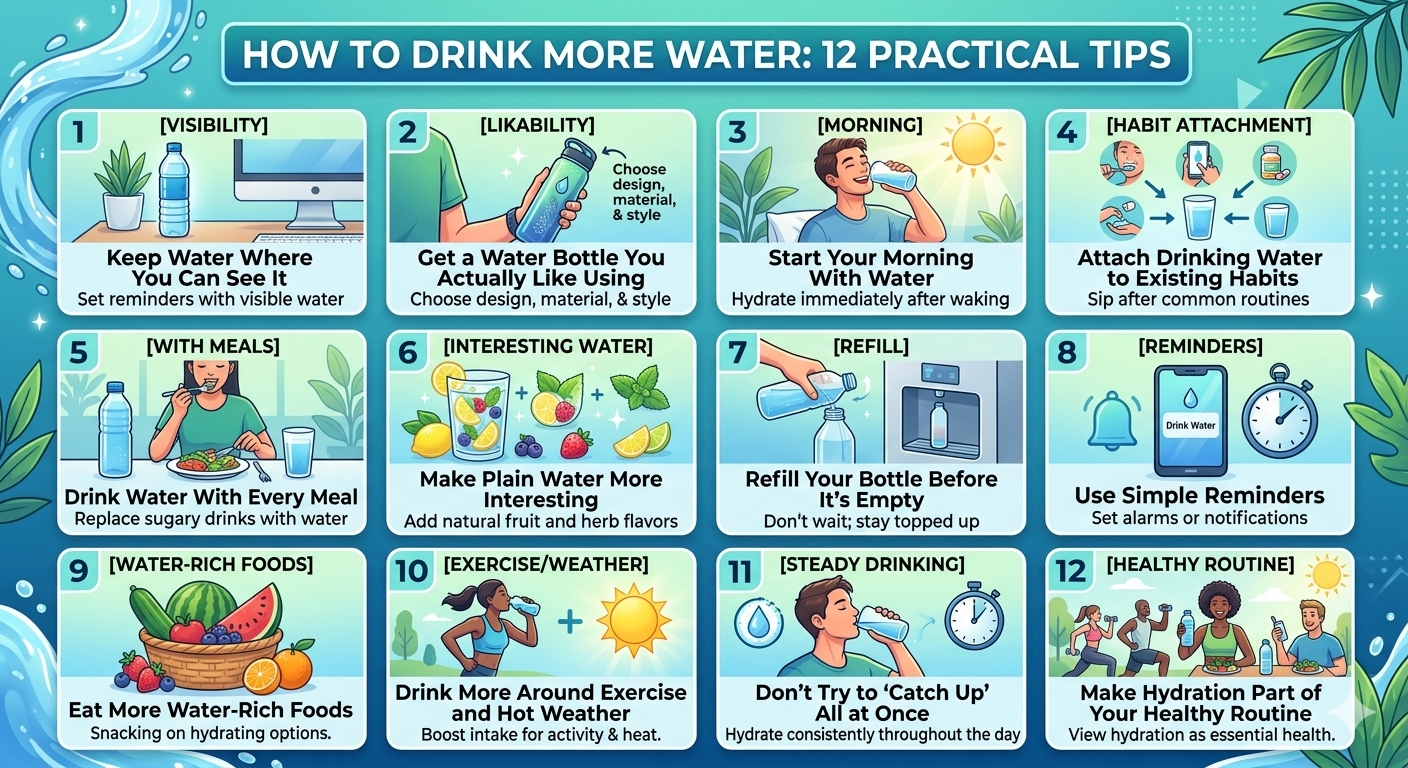
Here are 12 simple strategies that can help.
1. Keep Water Where You Can See It
One of the easiest ways to drink more water is also one of the most obvious:
Keep it in front of you.
If your water bottle is sitting in the kitchen while you’re working upstairs, you’re relying on yourself to remember to get it.
If it’s sitting beside your keyboard, you’ll probably take a drink without even thinking about it.
Try keeping water:
- On your desk while working
- Beside you while watching TV
- In your bag when leaving the house
- Near your workout equipment
- On the table during meals
Your environment influences your habits. Make water visible and convenient.
2. Get a Water Bottle You Actually Like Using
A good reusable water bottle can make a surprisingly big difference.
Look for one that’s:
- Easy to carry
- Comfortable to drink from
- Leak resistant
- Easy to clean
- Large enough that you aren’t constantly refilling it
Some people also find bottles with measurement markings or time reminders helpful because they make their progress visible throughout the day.
I personally use this water bottle from Amazon.
- It holds a 4 cups of water,
- provides markings that indicate how much you have consumed,
- and provides time markers to help you pace your water intake throughout the day
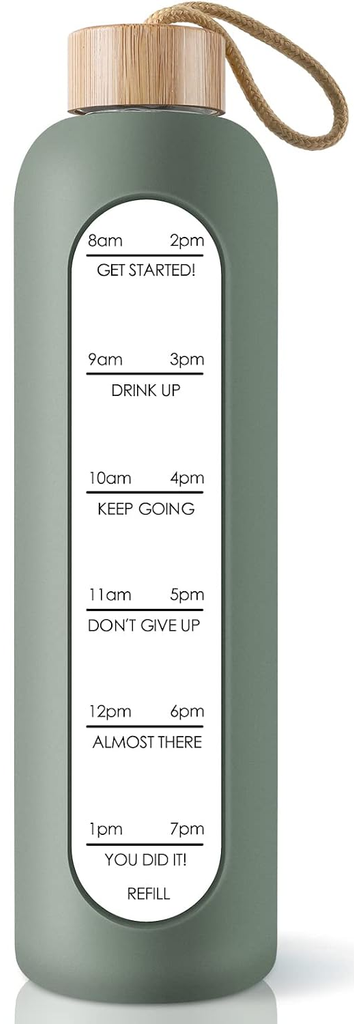
You don’t need an expensive bottle to stay hydrated. But if having a bottle you enjoy carrying makes you more likely to drink water consistently, it’s a worthwhile tool.
3. Start Your Morning With Water
Try drinking some water shortly after waking up.
This works particularly well because you’re attaching hydration to something that happens every day: getting out of bed.
You could keep a glass or bottle in the kitchen and drink some while:
- Making breakfast
- Preparing coffee
- Packing lunches
- Taking your morning vitamins or medications, if applicable
You don’t need to force yourself to drink a huge amount.
The goal is simply to start the day hydrated and establish your first drinking cue.
Drinking a cup or more of water before your coffee helps with overnight dehydration, mitigates the caffeine crash, and wakes up the digestive system.
4. Attach Drinking Water to Existing Habits
One of the easiest ways to create a new habit is to connect it to something you already do automatically.
For example:
After I make coffee → I drink some water.
Before I eat lunch → I drink some water.
After I use the bathroom → I take a few sips.
When I return to my desk → I drink some water.
Before I leave the house → I fill my water bottle.
Instead of relying on memory, existing habits become reminders.
This approach can make learning how to drink more water daily much easier.
5. Drink Water With Every Meal
Meals provide three convenient hydration reminders every day.
Make water your default drink with breakfast, lunch, and dinner.
If you already drink something else with your meal, that’s fine. You can still keep a glass of water nearby.
This strategy also spreads your water intake throughout the day instead of trying to catch up in the evening.
6. Make Plain Water More Interesting
Not everyone enjoys drinking plain water all day.
Fortunately, you can add flavor without turning your water into a sugary drink.
Try adding:
- Lemon
- Lime
- Orange slices
- Cucumber
- Mint
- Berries
You can also experiment with sparkling water or unsweetened flavored water.
If making water more enjoyable helps you drink it consistently, that’s a win.
7. Refill Your Bottle Before It’s Empty
This sounds insignificant, but it can prevent a surprisingly common problem.
You finish your water.
You think:
“I’ll refill that in a minute.”
Two hours later, the empty bottle is still sitting beside you.
When you notice your bottle getting low, refill it the next time you get up.
Even better, connect refilling it to another habit.
For example:
Every time I make coffee or tea, I refill my water bottle too.
8. Use Simple Reminders
If you regularly forget to drink while concentrating, reminders can help until the habit becomes automatic.
You might use:
- A phone reminder
- A smartwatch notification
- Calendar reminders
- A water-tracking app
- A bottle with time markings
But don’t make hydration another complicated productivity system.
If eight notifications every day become annoying, you’ll probably start ignoring them.
Start with one or two reminders during the times you most commonly forget.
9. Eat More Water-Rich Foods
Drinks aren’t your only source of fluids.
Many foods contain substantial amounts of water, particularly fruits and vegetables.
Examples include:
- Watermelon
- Strawberries
- Oranges
- Grapes
- Cucumbers
- Tomatoes
- Lettuce
- Celery
- Soups
Eating plenty of fruits and vegetables therefore contributes to your overall fluid intake while also providing fiber, vitamins, minerals, and other nutrients.
It’s another reason hydration should be considered part of your overall eating pattern rather than an isolated daily target.
10. Drink More Around Exercise and Hot Weather
Your fluid needs aren’t exactly the same every day.
You generally lose more fluid when you’re:
- Exercising
- Sweating heavily
- Spending time outside in hot weather
- Physically active for long periods
That means the amount of water that feels adequate during a quiet day indoors might not be enough during a long summer hike or workout.
For most everyday activities, water and normal meals are generally sufficient.
During longer or particularly strenuous exercise, heavy sweating, or extended periods in the heat, you may also hear recommendations about replacing electrolytes.
Electrolytes such as sodium and potassium play important roles in fluid balance and normal body function—but that doesn’t mean everyone needs an electrolyte drink every day.
Want to know when they’re actually useful? Read: Electrolytes benefits: What Are Electrolytes and When Do You Need Them?
11. Don’t Try to “Catch Up” All at Once
Realizing at 8 p.m. that you haven’t had much water doesn’t mean you need to suddenly drink several huge glasses.
It’s generally more comfortable to spread your fluid intake throughout the day.
That’s why routines work better than relying on a daily target.
Instead of thinking:
“I have to drink all this water today.”
Think:
“I’ll keep water nearby and drink regularly throughout the day.”
Small amounts consumed consistently can add up surprisingly quickly.
12. Make Hydration Part of Your Healthy Routine
Drinking more water becomes much easier when it isn’t treated as a separate task.
Connect it with the healthy habits you’re already building.
For example:
Morning: Drink water with breakfast.
Work: Keep a bottle beside you.
Lunch: Drink water with your meal.
Afternoon: Refill your bottle when you take a break.
Workout: Bring water with you.
Dinner: Have another glass with your meal.
Instead of constantly asking yourself whether you’ve had enough water, hydration simply becomes part of your day.
How Much Water Should You Drink Every Day?
You’ve probably heard that everyone should drink eight glasses of water per day.
The reality is more complicated.
There isn’t one perfect amount that’s appropriate for every person.
Your fluid needs can vary depending on factors such as:
- Body size
- Activity level
- Climate
- Diet
- Pregnancy or breastfeeding
- Certain medications
- Health conditions
And remember that your total fluid intake doesn’t come exclusively from plain water. Other beverages and water-rich foods contribute too.
For many healthy people, thirst and urine color can provide useful everyday feedback. Pale yellow urine often indicates adequate hydration, although medications, supplements, foods, and medical conditions can affect urine color.
If you have a medical condition that affects your fluid requirements, follow the guidance provided by your healthcare professional rather than a generic online recommendation.
Do Coffee and Tea Count Toward Hydration?
Yes.
It’s a common misconception that coffee and tea automatically dehydrate you because they contain caffeine.
While caffeine can have a mild diuretic effect, beverages such as coffee and tea still contribute fluid to your daily intake for most people.
That doesn’t necessarily mean you should replace all your water with coffee.
But your morning coffee isn’t automatically undoing your hydration efforts either.
Should You Drink Water Even When You’re Not Thirsty?
You don’t need to spend the entire day forcing yourself to drink water.
For many healthy adults, thirst is an important signal.
The challenge is that busy schedules sometimes make those signals easy to ignore.
You may notice you’re thirsty during a meeting and decide to get water afterward—then forget.
That’s where keeping a bottle nearby and developing regular drinking habits can help.
How to Drink More Water Daily at Work
Work is one of the easiest places to forget about hydration.
You get absorbed in a task, jump between meetings, and suddenly several hours have passed.
Try this simple routine:
Start work: Fill your bottle.
Morning break: Check your bottle and drink if you’re thirsty.
Lunch: Have water with your meal.
Afternoon: Refill your bottle.
End of workday: Bring the bottle with you rather than leaving it behind.
You don’t need to obsessively track every ounce.
The bottle itself becomes a visual reminder.
How to Drink More Water If You Don’t Like Water
If plain water doesn’t appeal to you, experiment.
Try:
- Cold water
- Room-temperature water
- Sparkling water
- Fruit-infused water
- Herbal tea
- Unsweetened flavored water
Temperature alone can make a surprising difference. Some people love ice-cold water while others find it much easier to drink at room temperature.
Find what you actually enjoy.
The best hydration strategy isn’t necessarily the one that sounds healthiest on paper.
It’s the one you’ll consistently follow.
Try This Simple Hydration Challenge
If you’re trying to figure out how to drink more water daily, don’t start by obsessing over an exact number.
For the next seven days, try just three things:
1. Keep a reusable water bottle beside you throughout the day.
2. Drink water with each meal.
3. Refill your bottle whenever you take a longer break.
That’s it.
At the end of the week, ask yourself:
- Am I remembering to drink more often?
- Do I feel thirsty less frequently?
- Which part of the routine was easiest?
- When do I still forget?
Then adjust your routine.
Healthy habits are much easier to maintain when you build them gradually.
The Bottom Line
Learning how to drink more water daily doesn’t require complicated tracking, rigid schedules, or forcing yourself to drink enormous quantities.
Start small and work your way up to your target amount:
Make water convenient.
Keep it visible.
Find a reusable bottle you enjoy using.
Connect drinking water with habits you already have.
Eat plenty of water-rich fruits and vegetables.
And adjust your intake when you’re exercising, sweating more, or spending time in hot weather.
Most importantly, create a routine you can actually maintain.
Just like healthy eating, hydration doesn’t need to be perfect to make a difference. A few small changes that become automatic are much more valuable than an ambitious hydration plan you abandon after three days.
Related Reading
Continue building simple, sustainable healthy habits: