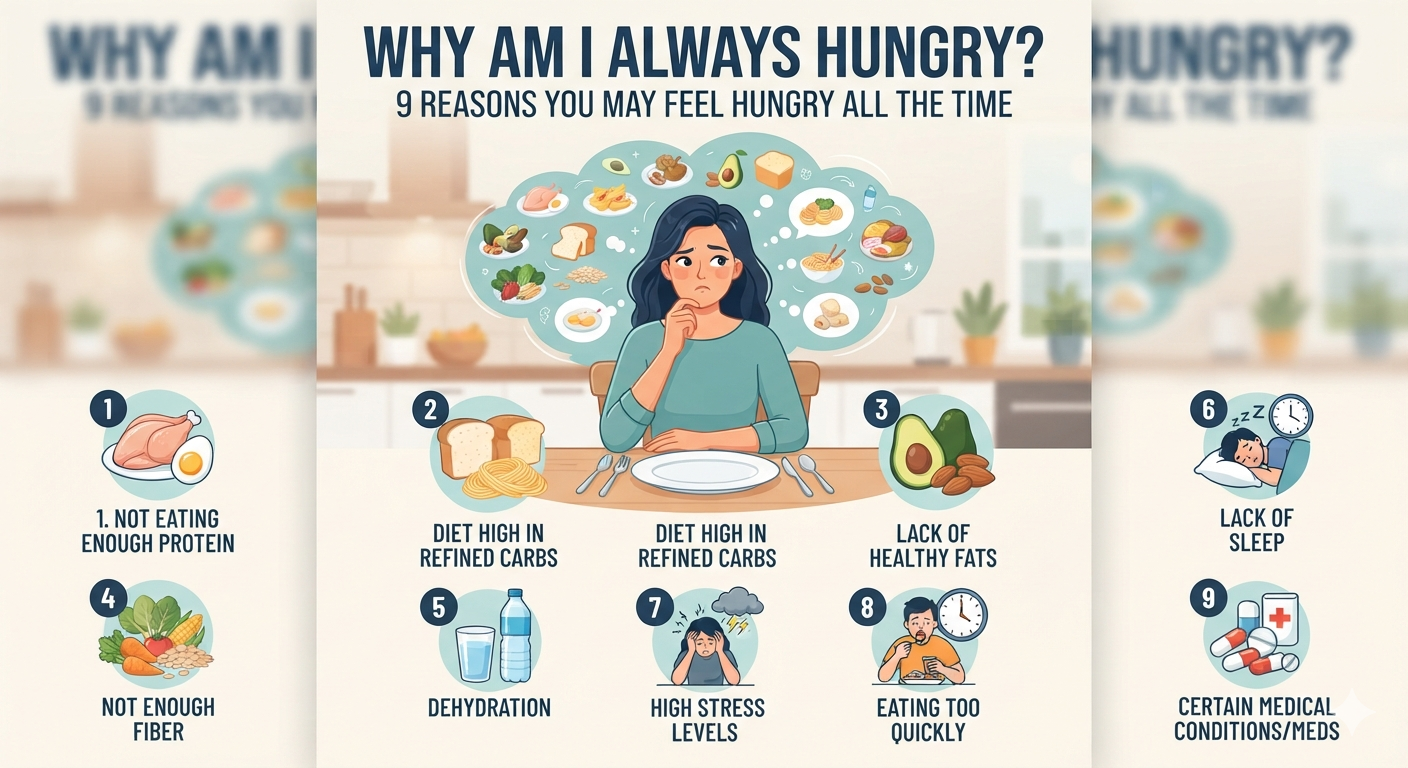
Have you ever finished a meal only to find yourself looking for something else to eat an hour or two later?
If you’ve found yourself asking “Why am I always hungry?”, you’re certainly not alone. Constant hunger can make healthy eating frustrating. You might start the day with good intentions, only to find yourself snacking throughout the afternoon or searching the kitchen again after dinner.
I know the feeling personally.
For a long time, I felt like I was always hungry. I could eat what seemed like a reasonable meal and still want something else shortly afterward. One of the biggest changes for me was paying attention to how much protein I was actually eating.
Once I started consistently getting enough protein throughout the day, I noticed a significant difference in how satisfied I felt between meals. Meal replacement shakes became one convenient way for me to increase my protein intake, particularly when I didn’t have time to prepare a protein-rich meal.
But protein isn’t the only possible explanation for constant hunger.
If you’re wondering why you’re always hungry even after eating, here are some of the most common reasons—and practical changes that may help.
1. You May Not Be Eating Enough Protein
This was the biggest factor for me personally, so it’s a good place to start.
Protein plays an important role in satiety—the feeling of fullness and satisfaction you experience after eating. Compared with meals that are low in protein, meals containing adequate protein can help you feel satisfied for longer.
The problem is that it’s surprisingly easy to eat meals that contain relatively little protein.
Consider a breakfast consisting of toast and jam, a bowl of certain cereals, or a pastry and coffee. You may consume plenty of calories, but the meal might not be particularly filling.
Adding a meaningful source of protein changes the composition of the meal.
Depending on your dietary preferences, protein-rich foods can include:
- Eggs
- Greek yogurt
- Cottage cheese
- Tofu and tempeh
- Lentils and beans
- Fish
- Chicken or turkey
- Nuts and seeds
- Protein-rich smoothies
- Meal replacement shakes
What Worked for Me
I didn’t initially realize how much my protein intake affected my hunger.
I simply knew I seemed to be hungry all the time.
Once I made a conscious effort to include enough protein regularly, staying satisfied became much easier. Instead of constantly thinking about my next snack, I could comfortably go longer between meals.
One of the challenges was convenience. It’s one thing to know you need protein; it’s another to prepare protein-rich meals when you’re busy.
That’s one reason meal replacement shakes worked well for me. They gave me a predictable source of protein that required almost no preparation.
That doesn’t mean you need a shake to get enough protein. Whole foods can provide everything you need. For me, shakes simply made consistency easier.
2. Your Meals May Not Contain Enough Fiber
Protein isn’t the only nutrient that can help with fullness.
Fiber also plays an important role.
High-fiber foods generally take longer to digest and can help you feel satisfied after eating. They also offer numerous other nutritional benefits.
Good sources include:
- Vegetables
- Fruit
- Beans
- Lentils
- Oats
- Whole grains
- Nuts
- Seeds
A meal containing protein and fiber tends to be much more satisfying than a highly processed meal containing mostly refined carbohydrates.
For example, compare a sugary breakfast pastry with oatmeal topped with berries, nuts, and Greek yogurt.
Both are breakfast.
But they may leave you feeling very different two hours later.
3. You’re Eating Lots of Refined Carbohydrates
Carbohydrates aren’t inherently unhealthy.
Fruit, vegetables, beans, oats, and whole grains all contain carbohydrates and can be part of a nutritious diet.
The problem is when much of your diet comes from highly refined carbohydrate-rich foods such as:
- Candy
- Cookies
- Pastries
- Sugary cereals
- Sweetened drinks
- Some highly processed snack foods
These foods can be easy to eat quickly and may provide plenty of calories without being especially satisfying.
Instead of trying to eliminate carbohydrates, combine them with protein, fiber, and healthy fats.
Rather than eating crackers alone, for example, you could have crackers with hummus and vegetables.
Instead of eating an apple by itself, try adding a small handful of nuts or some Greek yogurt.
The goal is a more balanced snack—not eliminating an entire food group.
4. You’re Not Eating Enough at Meals
Sometimes the answer to “Why am I always hungry?” is surprisingly straightforward:
You might genuinely need more food.
Trying to eat as little as possible isn’t necessarily an effective way to improve your diet.
If breakfast consists of coffee, lunch is a tiny salad, and you’re desperately searching for snacks by mid-afternoon, your body may simply be responding to insufficient food.
Instead of making meals as small as possible, focus on making them satisfying.
A balanced meal might contain:
Protein + vegetables or fruit + fiber-rich carbohydrates + healthy fats
For example:
Tofu + roasted vegetables + brown rice + avocado
or:
Greek yogurt + berries + oats + nuts
You may find that eating a more substantial meal actually reduces the urge to snack constantly afterward.
5. You’re Drinking Your Calories
There’s an important distinction between a nutritionally balanced meal replacement and simply drinking calories.
Soft drinks, sweetened coffees, juice drinks, and similar beverages can add significant calories without providing the same satisfaction as a balanced meal.
Water should generally be your primary beverage.
If you’re drinking a shake as a meal, look for something designed to provide balanced nutrition rather than simply a sugary drink marketed as healthy.
A meal replacement should ideally contain meaningful amounts of protein and fiber along with other nutrients.
6. You May Actually Be Thirsty
Hunger and thirst aren’t the same thing, but when you’re busy, it can be easy to overlook hydration and reach for food instead.
Try keeping water nearby throughout the day.
You don’t need to force yourself to drink enormous quantities. Simply making water convenient and drinking regularly can help you distinguish between wanting a drink, wanting a snack, and genuinely being hungry.
7. You’re Not Getting Enough Sleep
Food isn’t the only factor affecting appetite.
Sleep matters too.
Insufficient sleep can influence hormones involved in appetite regulation and may increase hunger and cravings.
You’ve probably experienced this after a particularly bad night’s sleep.
Suddenly, highly palatable foods seem much harder to resist.
If you frequently feel hungry while also sleeping poorly, improving your sleep routine may be worth considering alongside changes to your diet.
8. You’re Eating While Distracted
Have you ever opened a bag of snacks while watching television and suddenly realized the bag was nearly empty?
Distracted eating makes it easy to eat without paying much attention to the experience.
Phones, computers, television, and work can all pull your attention away from your meal.
You don’t have to practice perfect mindful eating at every meal.
But slowing down occasionally and actually noticing your food can make it easier to recognize when you’re satisfied.
Try sitting down without your phone for one meal and paying attention to:
- How hungry you are before eating
- How the food tastes
- How quickly you’re eating
- When you begin feeling satisfied
It sounds simple, but it can reveal habits you didn’t realize you had.
9. You’re Bored, Stressed, or Eating Out of Habit
Not every desire to eat comes from physical hunger.
Sometimes we eat because we’re:
- Bored
- Stressed
- Tired
- Procrastinating
- Watching television
- Used to eating at a certain time
There’s nothing wrong with occasionally eating simply because you enjoy something.
The useful skill is recognizing the difference.
Before automatically grabbing a snack, ask yourself:
“Am I physically hungry right now, or do I just feel like eating?”
You don’t necessarily have to change your decision. Simply noticing the distinction can help you understand your eating patterns.
How Much Protein Do You Need to Stop Feeling Hungry?
There isn’t one protein target that’s appropriate for everyone. Your needs can vary based on factors such as your age, body size, activity level and overall health.
Rather than obsessing over a perfect number, a useful starting point for many people is simply to ask:
Does each of my main meals contain a meaningful source of protein?
If your breakfast is almost entirely carbohydrates, consider adding protein.
If lunch is a salad containing mostly vegetables, add beans, tofu, eggs, fish, chicken, cottage cheese, or another protein source you enjoy.
If you’re constantly hungry between meals, look at the composition of those meals before assuming you simply lack willpower.
For me, making protein a regular priority made a noticeable difference.
Can Meal Replacement Shakes Help With Hunger?
They can, depending on the product and how you use them.
A meal replacement shake isn’t inherently better than a balanced whole-food meal.
The advantage is convenience.
On a busy morning, I could either prepare a complete meal, grab whatever happened to be available, or use a meal replacement shake that provided a predictable amount of protein and other nutrients.
That made it easier for me to consistently get the protein I needed.
If you’re considering a meal replacement, look beyond the marketing on the front of the package. Check the nutrition information and consider:
- Protein
- Fiber
- Added sugars
- Calories
- Vitamins and minerals
- Overall ingredient quality
And remember that a protein shake and a meal replacement aren’t necessarily the same thing. A basic protein powder may provide plenty of protein but lack the carbohydrates, fats, fiber, vitamins, and minerals expected from a complete meal.
To learn more about my recommended meal replacement shake that has been part of my morning routine for years, please read my guide on IsaLean shakes.
What to Eat When You’re Always Hungry
If constant hunger is a problem, experiment with building meals around foods that provide protein, fiber, and nutritional variety.
For breakfast, you might try:
Greek yogurt + berries + oats + nuts
For lunch:
Lentils or chicken + quinoa + vegetables + avocado
For a snack:
Apple + peanut butter
For dinner:
Tofu or fish + roasted vegetables + potatoes
And when you don’t have time to prepare a complete meal, a balanced meal replacement can provide another convenient option.
You don’t need to eat these exact foods.
The important idea is the combination.
Try This for One Week
If you’re wondering “Why am I always hungry?”, don’t overhaul your entire diet tomorrow.
Run a simple experiment instead.
For one week, pay attention to your meals and ask:
Where’s my protein?
Make sure each main meal contains a good protein source. Then add fiber-rich whole foods such as vegetables, fruit, beans, or whole grains.
Also pay attention to how you feel afterward.
Are you hungry again in an hour?
Do you make it comfortably to your next meal?
Are afternoon cravings different?
You may start discovering patterns in your own diet.
That’s essentially what happened to me. Increasing my protein intake wasn’t a complicated diet strategy, but it made a noticeable difference in how often I felt hungry.
When Constant Hunger Is Worth Discussing With a Doctor
Occasional hunger is normal, and appetite naturally varies from day to day.
However, persistent or unusually intense hunger can sometimes have causes beyond your eating habits, including certain medications or medical conditions.
If your appetite has suddenly changed, your hunger seems extreme, or it’s accompanied by other unexplained symptoms, consider discussing it with a qualified healthcare professional rather than trying to solve everything through diet alone.
The Bottom Line
If you keep asking yourself “Why am I always hungry?”, start by looking at what you’re eating rather than assuming you simply need more willpower.
For me, protein was a major part of the answer.
Once I started consistently eating enough protein, I felt much more satisfied between meals. Meal replacement shakes helped because they made getting that protein convenient on days when preparing a complete meal wasn’t realistic.
Your experience may be different.
But making your meals more balanced—with adequate protein, fiber-rich foods, healthy fats, and enough total food—is a good place to start.
Healthy eating doesn’t have to mean constantly fighting hunger.
In fact, finding meals that actually leave you satisfied may be one of the things that makes healthy eating sustainable in the first place.
Related Reading
If you’re working on making healthy eating easier, you may also enjoy: